
Concrete Contractors Flintstone GA

Concrete Contractors Flintstone GA
Quick Answer
If you’re comparing concrete contractors Flintstone GA property owners can hire, pay attention to how the contractor plans around the property that’s already there. Established driveways, homes, landscaping, slopes, and existing walkways can all affect where new concrete should go and how crews can reach the work area.
TriStar Concrete Solutions provides residential concrete services throughout Flintstone and nearby North Georgia communities. We evaluate the existing layout first so a driveway, patio, walkway, retaining wall, or structural concrete project fits the property instead of feeling added on afterward.
Talk With Our Team
Planning a residential or commercial concrete driveway project in Cleveland, TN, Chattanooga, TN, or a surrounding community? TriStar Concrete Solutions is ready to help. Reach out today for a free quote.
Existing Properties Need More Than a Blank-Slate Plan
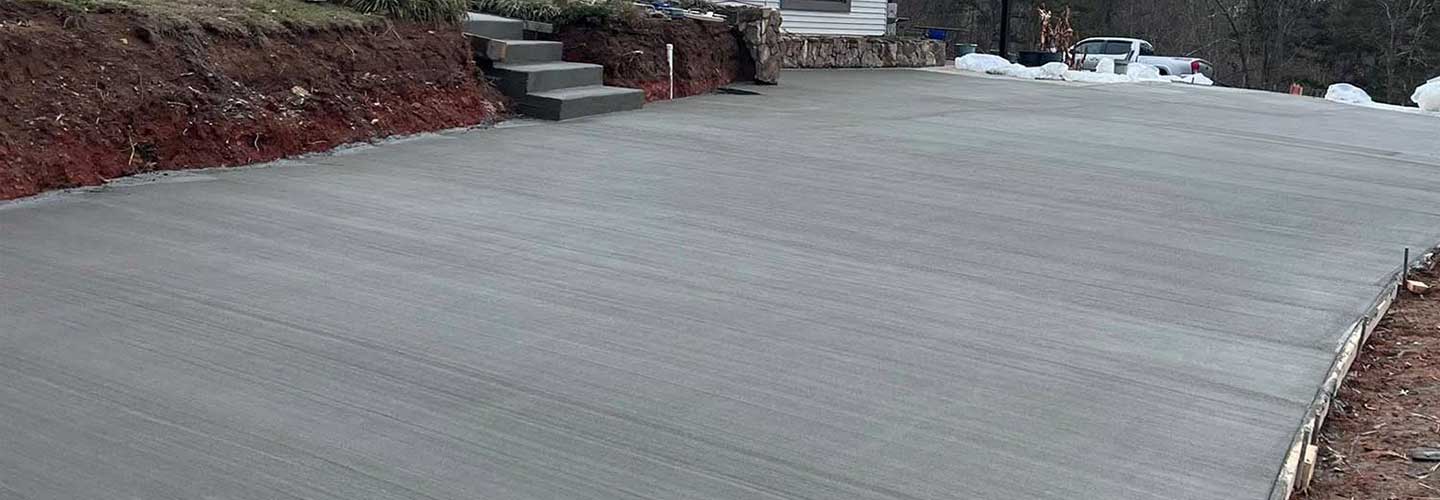
A lot of concrete work in established neighborhoods starts with fitting something new around what already exists. The home may already have a driveway, mature landscaping, fences, steps, or another hardscape that the new work has to connect with cleanly. That makes planning less about drawing a rectangle on open ground and more about improving the way the property works as a whole.
This is especially important when access is limited. A backyard patio may sit behind a narrow side yard, while a driveway extension may need to work around utilities, landscaping, or an existing retaining wall. Before we talk about finishes, we look at how the crew can reach the project, what needs to stay protected, and where the new concrete will meet the existing property.
Driveway Replacement Should Improve the Connections
A replacement driveway has to connect several parts of the property at once. It meets the road at one end, the garage or parking area at the other, and often interacts with walkways or drainage along the sides.
When the old driveway starts cracking, settling, or breaking apart, those failures can also tell us where the layout or support may need attention. A low section near the garage may point to drainage or settlement, while broken edges can show where vehicles repeatedly load an area that never had enough support.
Removing the old slab gives us access to those conditions. That makes replacement a chance to improve transitions, correct weak areas underneath, and reconsider whether the original width still works for the way the household uses the driveway today.
Extensions Can Add Room Without Replacing Good Concrete
An existing driveway doesn’t have to fail before it becomes inconvenient. More vehicles, larger trucks, or a tighter parking arrangement can make a sound driveway feel too narrow even when the slab itself remains in good condition.
A concrete extension can add usable width while preserving the original surface. We look at how the new section will meet the existing driveway, where vehicle tires will travel, and whether the additional concrete changes runoff along the edge.
That connection deserves careful planning because the new slab and old slab won’t age in exactly the same way. The extension should still feel intentional, and the added parking should improve daily use without creating an awkward seam or drainage issue.
Patios Have to Work Around the House
A backyard patio often sits close to several fixed elements. Doors, steps, landscaping, decks, and existing walkways can limit where the surface should begin and how large it can become.
We start by looking at how people will actually move through the area. If the patio will hold a dining table, grill, or seating, the dimensions need to leave enough room for furniture and comfortable circulation instead of filling every available foot.
The finished elevation also needs to work with the home. Water should move away from the structure, and the patio should meet doors or walkways without creating an unnecessary step or awkward transition. Once those details are right, stamped or colored concrete can add a decorative finish without trying to solve a layout problem after the fact.
Walkways Should Connect the Routes People Already Use
Walkways work best when they follow the way people naturally move around the property. If everyone already cuts from the driveway toward a side door or backyard gate, that path usually tells you where a concrete walkway would be most useful.
The challenge comes from making the new route fit existing elevations. A walkway that starts too high, ends too low, or crosses a drainage path can create more inconvenience than it solves.
We look at the beginning and end points first, then shape the route around them. That approach gives the walkway a practical purpose and helps it feel like part of the property instead of an isolated strip of concrete.
Retaining Walls Need to Fit the Site Around Them
Flintstone sits in the Chattanooga Valley area near Lookout Mountain, where elevation can change quickly between flatter residential areas and the mountain edge. Walker County planning maps reflect that transition across the surrounding area.
When a property has a slope that needs support, a retaining wall can create a cleaner transition between elevations and make another improvement more practical. The wall may support a patio area, help define a walkway, or hold back soil beside another part of the yard.
The wall still has to manage the pressure behind it. We account for support below grade and water movement behind the wall because a retaining wall has to function structurally long after the decorative face is finished.
Structural Concrete Requires Coordination Before Construction Moves Forward
Detached garages, additions, and workshops can require concrete slabs, footers, or foundation walls before the rest of the structure begins. Those concrete components need to follow the requirements of the project because the framing and loads above them rely on work that eventually disappears from view.
TriStar Concrete Solutions installs structural concrete for residential projects where those elements are required. We look at the planned structure before starting so the slab, footing, and wall components relate to the building rather than being treated as separate concrete jobs.
This coordination saves trouble later. Once walls go up and the project advances, correcting concrete underneath the structure becomes far more disruptive than getting the requirements right before construction continues.
Site Access Can Change How the Project Is Handled
Concrete crews need room to work, but established properties don’t always provide a straight path to the project area. Fences, narrow side yards, landscaping, and existing improvements can all affect how demolition material comes out and how new concrete reaches the site.
That doesn’t automatically make the project impractical. It does mean the contractor should understand the access before giving you a scope that assumes equipment can move freely anywhere on the property.
We factor those conditions into the plan early. That helps protect areas that are staying in place and gives the homeowner a clearer understanding of what the work will involve before the project begins.
Compare the Work, Not Just the Finished Square Footage
Two estimates can describe the same size patio or driveway while including very different work. One contractor may account for demolition, access limitations, base correction, reinforcement, and changes to the grade, while another may leave several of those items undefined.
The difference becomes important because most of that work disappears after the concrete goes in. You won’t see base preparation or reinforcement when you look at the finished patio, but you’ll live with the result of those decisions.
Ask what the contractor plans to remove, how the area will be prepared, and what happens if the site reveals a problem once demolition begins. A clear explanation gives you a much better way to compare contractors than a price alone.
Frequently Asked Questions
What concrete services do you provide in Flintstone?
TriStar Concrete Solutions provides concrete driveways, driveway repair and replacement, driveway extensions, patios, walkways, slabs, demolition, stamped concrete, colored concrete, retaining walls, concrete footers, and foundation walls. We work on both replacement projects and new residential improvements. The scope varies according to the property and the type of concrete being installed.
Can you widen an existing driveway?
Yes, when the existing driveway remains suitable for an extension. We look at the condition of the current slab, how vehicles will use the added area, and how the new concrete will affect the surrounding grade. That evaluation helps determine whether an extension makes sense or whether the existing driveway needs more extensive work first.
Do you install patios behind existing homes?
Yes. We install concrete patios on established properties where access, drainage, and connections to the home need to be worked into the layout. We also provide stamped and colored concrete for homeowners who want a more decorative finish after the size and placement have been established.
Do you build retaining walls and structural concrete?
Yes. TriStar installs concrete retaining walls, footers, foundation walls, and slabs for appropriate residential projects. Those jobs require more attention to support, grade, reinforcement, and the structure or soil they’re intended to carry.
What areas do you serve around Flintstone?
TriStar Concrete Solutions serves Flintstone, Lookout Mountain, Fort Oglethorpe, Rossville, Chickamauga, Chattanooga, and surrounding North Georgia and Southeast Tennessee communities. Flintstone sits within Walker County’s Chattanooga Valley precinct area, which places it directly inside our broader North Georgia service market.
Talk With TriStar About Your Flintstone Concrete Project
If you’re researching concrete contractors Flintstone GA property owners can call, choose a contractor who pays attention to how the new work fits what’s already on the property. TriStar Concrete Solutions brings more than 40 years of combined experience to residential concrete projects throughout North Georgia and the Chattanooga area.
Call (423) 322-0670 or contact TriStar Concrete Solutions through our website to request an estimate.