
Concrete Contractors Trenton GA

Concrete Contractors Trenton GA
Quick Answer
If you’re comparing concrete contractors Trenton GA property owners can hire, pay attention to how the contractor reads the site before discussing the finished surface. In an area where properties can move quickly from relatively level valley lots to noticeable elevation changes, the way a driveway, patio, retaining wall, or slab fits the grade can affect the project from the beginning.
TriStar Concrete Solutions provides residential concrete work throughout Trenton and surrounding North Georgia communities. We look at drainage, access, existing concrete, and how the new work needs to function before deciding how the project should move forward.
Talk With Our Team
Planning a residential or commercial concrete driveway project in Cleveland, TN, Chattanooga, TN, or a surrounding community? TriStar Concrete Solutions is ready to help. Reach out today for a free quote.
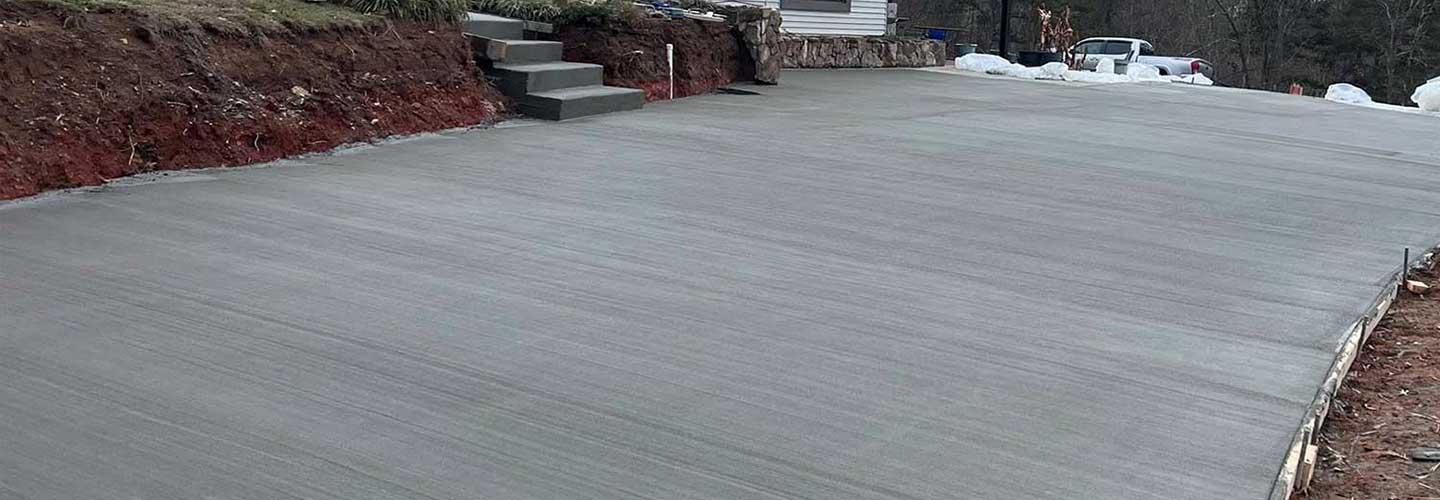
Trenton Properties Can Change Quickly From One Lot to the Next
Trenton sits in the valley between Lookout Mountain and Sand Mountain, which means nearby properties can have very different site conditions even when they aren’t far apart. Some lots offer relatively straightforward access and grade, while others introduce slopes, elevation changes, or drainage paths that need more attention before concrete goes in.
That variation makes site evaluation more useful than assumptions based on square footage. A driveway that climbs toward the home has different needs than one sitting on flatter ground, and a backyard patio beside a slope may require more planning than the same patio on a level lot.
We’d rather account for those conditions before installation than discover later that the finished concrete directs water poorly, creates an awkward transition, or doesn’t work naturally with the property.
Driveways Need to Work With the Grade
A driveway can be structurally sound and still be frustrating every day if the layout doesn’t suit the property. Steep approaches, narrow sections, poor transitions at the garage, and areas where water repeatedly crosses the surface can all make a driveway harder to use than it should be.
When an existing driveway needs replacement, we look at more than the cracks. The old slab can show where support has changed, where water collects, and whether the original layout created problems that should be corrected instead of repeated.
Replacement gives you a chance to reconsider width, approach, drainage, and how vehicles move through the property. If the old driveway never worked particularly well, rebuilding the same footprint doesn’t make much sense.
A Driveway Extension Can Solve a Different Problem
Sometimes the existing concrete is still in good condition and the real issue is space. Another vehicle, a work truck, or a growing household can make a driveway feel undersized even when the concrete slab itself has plenty of life left.
In that situation, a driveway extension may be the more practical project. We look at how the new section will meet the existing concrete, how vehicles will use the added space, and whether the surrounding grade can support the wider footprint without creating drainage trouble.
The extension should feel like part of the driveway rather than a separate slab added beside it. That requires more thought than simply measuring how much extra parking you want.
Retaining Walls Need to Manage Water as Well as Soil
Retaining walls become especially important where a property changes elevation. The wall may create a cleaner transition between levels, hold back a slope, or support another improvement, but it also has to handle pressure from the soil behind it.
Water increases that pressure. If drainage behind the wall isn’t addressed, the wall can end up carrying more force than the visible soil alone suggests.
That’s why we look at support below the wall, reinforcement, drainage, and the surrounding grade as one system. A retaining wall should solve the property problem without creating another one several years later.
Patios Need to Fit the House Before They Fit the Yard
Open space in the backyard doesn’t automatically mean every part of it works equally well for a patio. The best location usually comes from how people move in and out of the house, where the ground sits relative to doors and steps, and how water travels across the area after a hard rain.
The size should come from use rather than an arbitrary dimension. A patio meant for a table and grill needs enough room for chairs to move comfortably, while a larger entertaining area may need separate zones that don’t force everyone into the same narrow path.
TriStar installs traditional, stamped, and colored concrete patios. Decorative choices come later because the layout and elevation have to work before color or texture can improve anything.
Structural Concrete Requires a Different Kind of Planning
A slab for a detached garage or workshop doesn’t have the same job as a patio. It may support vehicles, walls, equipment, or other loads, and the project may also require concrete footers or foundation walls.
TriStar Concrete Solutions installs slabs, footers, and foundation walls for residential construction projects where those components are required. We need to understand what will sit above the concrete so the work below grade and at the slab level fits the project rather than being treated as generic flatwork.
That coordination becomes increasingly important once framing begins. Concrete under a structure is much harder to correct later, so the project should start with clear requirements instead of assumptions.
Existing Concrete Can Tell You Whether Repair Still Makes Sense
A cracked slab isn’t automatically a failed slab. Limited cracking on concrete that remains stable and properly supported can be very different from widespread settlement, repeated movement, or sections that have dropped enough to create uneven transitions.
We look at the whole surface before recommending repair or replacement. If the concrete still has good support and the damage remains isolated, repair may extend its useful life without taking on a larger project.
When several sections have moved or the problem clearly reaches below the surface, replacement gives us access to the base and grade. That makes it possible to address the cause instead of continuing to repair the visible symptom.
Good Preparation Isn’t the Same on Every Job
Concrete contractors sometimes describe preparation as though every project follows one standard sequence. The fundamentals are consistent, but the details change with the work.
A driveway has to handle repeated vehicle loads and practical transitions. A patio needs to work with the home and surrounding yard, while a retaining wall or foundation component introduces structural demands that require a different approach.
That’s where experience becomes useful. The contractor should be able to explain how excavation, grading, compaction, reinforcement, drainage, and joint planning apply to your project instead of repeating the same checklist regardless of what is being installed.
Compare What the Contractor Plans to Do
Two concrete estimates can cover the same general area and still represent very different projects. One may account for demolition, correcting weak support, adjusting the grade, difficult access, and cleanup, while another may leave several of those items vague.
That difference is worth understanding before choosing a contractor. Ask what happens before the concrete goes in, how existing material will be handled, and whether the estimate addresses obvious drainage or elevation concerns.
A lower total may still be a good estimate, but you should know why it’s lower. Comparing the work itself gives you a more useful basis for making the decision than comparing numbers without context.
Frequently Asked Questions
What concrete services do you provide in Trenton?
TriStar Concrete Solutions provides concrete driveways, driveway repair and replacement, driveway extensions, patios, walkways, slabs, demolition, stamped concrete, colored concrete, retaining walls, concrete footers, and foundation walls.
Can you replace a driveway on a sloped property?
Yes. We evaluate the grade, drainage, access, and condition of the existing driveway before planning the replacement. Sloped properties need particular attention to how vehicles use the surface and where water will travel afterward.
Do you install retaining walls?
Yes. TriStar installs concrete retaining walls for properties that need grade support or a stronger transition between elevations. Support below the wall and drainage behind it are part of the planning process.
Can you install concrete for a detached garage or workshop?
Yes. We install concrete slabs, footers, and foundation walls for residential structures where those components are required.
What areas do you serve around Trenton?
TriStar Concrete Solutions serves Trenton, Lookout Mountain, Fort Oglethorpe, Rossville, Chattanooga, and surrounding communities throughout Dade County, North Georgia, and Southeast Tennessee.
Discuss Your Trenton Concrete Project With TriStar
When you’re researching concrete contractors Trenton GA property owners can call, look for a contractor who pays attention to how the concrete fits the grade, drainage, access, and intended use of the property. TriStar Concrete Solutions brings more than 40 years of combined experience to residential concrete projects throughout North Georgia and the Chattanooga area.
Call (423) 322-0670 or contact TriStar Concrete Solutions through our website to request an estimate.