
Can New Concrete Be Installed Over Existing Concrete?

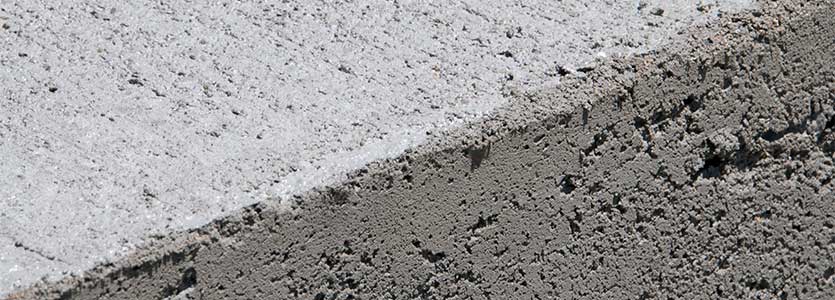
Can New Concrete Be Installed Over Existing Concrete?
Removing an old driveway, patio, or walkway takes time and adds demolition and disposal costs. It’s understandable that a property owner would ask whether the contractor can leave the existing slab in place and install something new over it.
In the right situation, a concrete overlay can refresh a worn surface without removing the entire slab. Overlays have legitimate uses, but they’re not a universal shortcut for damaged concrete.
The real question isn’t simply whether new concrete can cover old concrete.
It’s whether the existing slab gives the new surface anything dependable to hold onto.
When Can New Concrete Go Over an Existing Slab?
An overlay becomes a reasonable option when the existing concrete remains stable and the problems are mostly at the surface.
The old slab should:
- Sit firmly without sinking or rocking
- Have limited cracking
- Remain structurally sound
- Drain water in the right direction
- Leave enough room for the added surface height
- Provide a suitable base after repairs and preparation
The contractor still needs to inspect the surface for cracks, loose material, uneven areas, stains, sealers, and other conditions that could interfere with the new layer. ACI guidance also calls for cleaning and mechanical surface preparation so the overlay can form a dependable bond.
This type of work makes the most sense when the old concrete has a sound foundation and needs surface renewal rather than structural correction.
Existing Problems Don’t Disappear Under New Concrete
Covering a crack doesn’t remove the stress that caused it.
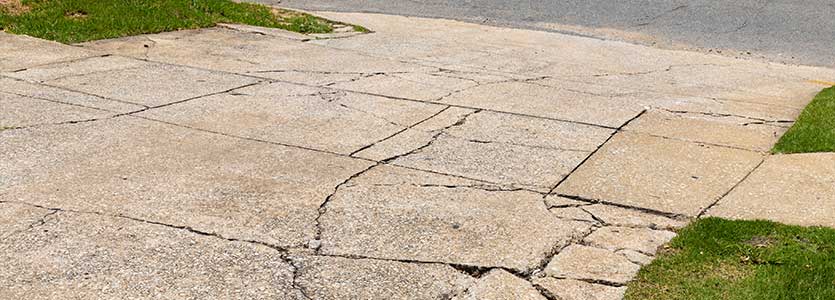
If the old driveway cracked because the ground settled, the base washed out, or the slab continues to move, a new surface won’t stop that movement. The problem can eventually affect the material above it too.
This often leads to reflective cracking, where cracks or joints from the original slab show through the newer surface. Poor bonding can also cause sections of an overlay to separate or break loose. Research and guidance published through ACI consistently tie overlay performance to the condition of the original concrete, surface preparation, placement, and curing.
That’s why a contractor needs to determine what caused the damage before recommending an overlay. Covering a cosmetic problem can make sense. Covering an active structural problem usually delays the repair rather than solving it.
Added Height Can Create Problems Around the Property
Every new layer raises the finished surface. Even a relatively thin overlay can affect how the concrete meets nearby features.
A higher surface can interfere with:
- Garage door clearance
- Steps and entryways
- Patio doors
- Walkway transitions
- Drainage slopes
- Landscaping edges
- Adjoining driveways or pavement
A driveway that already sits near the garage floor can’t keep getting taller without changing how water moves. A patio surface that rises too close to a doorway can direct rain toward the home instead of away from it.
These details often determine whether covering the existing concrete is practical. The old slab might look stable enough, but the surrounding elevations can still make removal and replacement the better choice.

A Decorative Overlay Isn’t a New Structural Slab
Not every concrete overlay does the same job.
Thin cement-based overlays can improve the color, texture, or appearance of a sound slab. However, decorative overlays typically don’t add meaningful structural support. They depend on the concrete underneath them.
A new driveway or load-bearing slab has a different purpose. It needs to support vehicle traffic and repeated daily use. Simply adding a thin surface layer won’t correct an inadequate base, weak sections, major settlement, or an original slab that no longer supports those demands.
This distinction matters because “new concrete over old concrete” can describe very different projects. A cosmetic resurfacing system isn’t the same as rebuilding a failing driveway.
Surface Preparation Determines Whether an Overlay Holds
A contractor can’t install an overlay successfully by cleaning the slab lightly and placing new material on top.
The existing surface needs a detailed inspection. Loose or deteriorated concrete must come out. Dirt, grease, paint, sealers, and other contaminants need to be removed because they can interfere with adhesion. The surface also needs the correct texture so the new material can bond properly.
Control joints require attention too. Contractors need to account for the existing joint pattern rather than covering everything and hoping cracks stay hidden. Current ACI guidance includes existing-pavement evaluation, preconstruction repairs, surface preparation, drainage, joint design, curing, and other project-specific factors when selecting and installing an overlay.
An overlay can work, but only when the contractor treats it as a complete installation process rather than a quick coating.
When Does Full Replacement Make More Sense?
Removing the old concrete usually makes more sense when the slab has widespread damage or problems below the surface.
Replacement is often the stronger option when:
- Multiple sections have sunk or shifted
- Wide cracks run through the slab
- Concrete rocks or moves under weight
- Water collects or drains toward the building
- The surface has extensive deterioration
- The original layout no longer works
- Added height would cause clearance or drainage problems
- The base underneath needs correction
Full replacement gives the contractor access to the ground below the slab. That creates an opportunity to correct grading, rebuild weak support, improve the layout, and address drainage before the new concrete goes in.
It takes more work up front, but it also solves problems that an overlay can’t reach.
Don’t Choose an Overlay Only to Avoid Demolition
Saving the old slab sounds economical, but it only saves money when the existing concrete can support the new surface.
Installing an overlay over unstable concrete can lead to another repair later. At that point, you’re paying to remove the new layer and the original slab. What looked cheaper at first becomes the more expensive path.
A trustworthy concrete contractor should inspect the existing surface, explain why it failed, and compare the available options. Sometimes an overlay makes good sense. Other times, removal and replacement provide the only dependable long-term answer.
Frequently Asked Questions
Will cracks in old concrete come through the new surface?
They can. If the old slab continues moving or the cracks don’t receive the right treatment, they can affect the overlay above. Existing joints and cracks need to be considered during planning and surface preparation.
Can you install new concrete over a cracked driveway?
A few stable cracks don’t automatically rule out an overlay. Widespread cracks, settlement, movement, or base failure usually indicate a larger problem that covering the driveway won’t correct.
Is an overlay the same as replacing the concrete?
No. An overlay uses the existing slab as its base. Replacement removes the old concrete so the contractor can inspect and prepare the ground before installing a completely new slab.
Can concrete resurfacing fix a sinking slab?
Resurfacing can improve appearance, but it doesn’t rebuild missing support below the concrete. A contractor first needs to identify why the slab sank and determine how to correct that problem.
How do I know whether my concrete can be covered?
A contractor needs to inspect the cracking, movement, drainage, surface condition, surrounding elevations, and intended use. Those conditions will show whether an overlay has a good chance of lasting or whether replacement makes more sense.
Get the Right Recommendation for Your Property
TriStar Concrete Solutions evaluates the condition of the existing slab before recommending how to move forward. We’ll look beyond the visible damage and consider the base, drainage, surrounding elevations, and how you use the space.
For concrete driveway, patio, or walkway work in Chattanooga, Cleveland, and surrounding communities, contact TriStar Concrete Solutions through our website or call (423) 322-0670 to request an estimate.
RECENT POSTS
Discover more helpful articles about concrete driveways, patios, walkways, and other residential concrete projects.
NEED HELP?
Don’t hesitate to contact us for more information about concrete services.
Talk With Our Team