
What Happens During a Concrete Driveway Replacement?

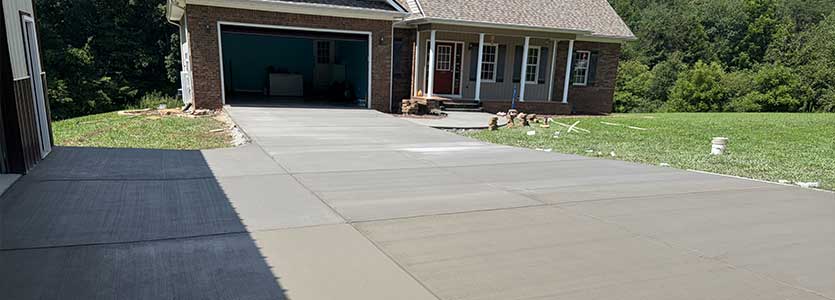
What Happens During a Concrete Driveway Replacement?
A concrete driveway replacement is more than breaking up the old slab and pouring a new one in its place. Once the existing concrete comes out, we can see conditions that weren’t visible before. That’s when we can determine whether the base needs correction, whether drainage contributed to the old driveway’s problems, and whether the original layout still makes sense for the property.
For homeowners, the process is usually easier when they know what to expect before work starts. You’ll temporarily lose access to the driveway, there will be demolition and equipment on the property, and some decisions may become clearer only after the old concrete has been removed.
We Start by Looking at Why the Existing Driveway Is Being Replaced
Before demolition, we want to understand what the old driveway is telling us. A few surface cracks are different from slabs that have settled, broken apart, or developed noticeable elevation changes. Water that regularly stands in one section also deserves attention before we recreate the same grade with new concrete.
Not every damaged driveway needs to come out. If you’re still deciding what level of work makes sense, our guide to concrete repair vs. replacement explains the conditions that usually push the decision in one direction or the other.
We also ask how the driveway works for the homeowner now. If vehicles barely fit, guests park in the grass, or the area beside the garage has always been too tight, replacement is a good time to address that. There’s little value in installing a new driveway with the same layout problem the homeowner has dealt with for years.
That conversation happens before the concrete comes out because widening or changing the footprint can affect demolition, grading, forms, and the amount of concrete required.
Demolition Gives Us Our First Good Look Under the Slab
Once the old concrete is broken up and hauled away, we can evaluate the area underneath it much more accurately. This concrete demolition phase is where a contractor may find soft material, inconsistent base depth, washout, or sections that were never supported as well as the rest of the driveway.
Not every old driveway reveals a major problem. Sometimes the support underneath is still in good condition and needs only normal preparation before the replacement. Other times, a section that had been sinking makes much more sense once the slab is gone.
We don’t want to cover a known weak area with fresh concrete and hope it behaves differently this time. If the support underneath needs attention, this is the point in the project when it can be corrected properly.
Base Preparation Can Change the Scope of the Job
Driveway pricing can’t be reduced to concrete square footage alone. Two driveways with the same dimensions may require very different preparation once demolition is complete.
Where needed, we remove unsuitable material, add base material, establish the correct elevations, and compact the area before placing new concrete. The objective is consistent support across the slab rather than one portion sitting on firm material while another rests over a weak area.
This part of the project isn’t very exciting to look at, but it’s where a lot of driveway performance is decided. A smooth finish won’t compensate for poor support underneath the slab.

This Is Also the Time to Correct Drainage
If water regularly collected on the old driveway, replacement gives us an opportunity to reconsider the elevations. We look at the garage, street, yard, neighboring surfaces, and natural direction of runoff before setting the finished grade.
The driveway still needs to feel comfortable to drive and walk across. We aren’t trying to create an obvious slope just to move water. We’re establishing enough fall for runoff to leave the surface without directing it toward the house or creating a new low area somewhere else.
Some properties give us more options than others. Existing garage elevations, road connections, sidewalks, and neighboring grades can limit how much change is possible, which is why drainage needs to be evaluated as part of the whole property rather than one isolated slab.
The Forms Show You What the New Driveway Will Actually Look Like
Once the base is ready, forms establish the outside dimensions and finished shape. This is when a widened driveway, parking extension, or revised edge becomes much easier for a homeowner to visualize.
We pay particular attention to transitions. The new driveway needs to meet the garage, road, and any concrete that remains without creating unnecessary bumps or abrupt changes in elevation.
This is also the wrong time to discover that the homeowner wanted another two feet of parking space. Layout changes are much easier before concrete placement than after the truck arrives, so we want the dimensions settled beforehand.
Reinforcement & Joints Are Planned Before the Pour Is Finished
Reinforcement is installed according to the needs of the project. It needs to remain in the correct position inside the slab rather than simply being present somewhere underneath the concrete.
We also plan control joints around the driveway dimensions. Concrete shrinks as it cures, so joints are used to create planned locations for that movement. They can’t guarantee that exterior concrete will never crack, but leaving joint placement to chance is not good concrete work.
Corners, changes in width, and larger sections all influence where joints belong. We consider those conditions while the driveway is being laid out rather than trying to make the joint pattern work afterward.
The Pour Is the Fastest Part of a Much Longer Process
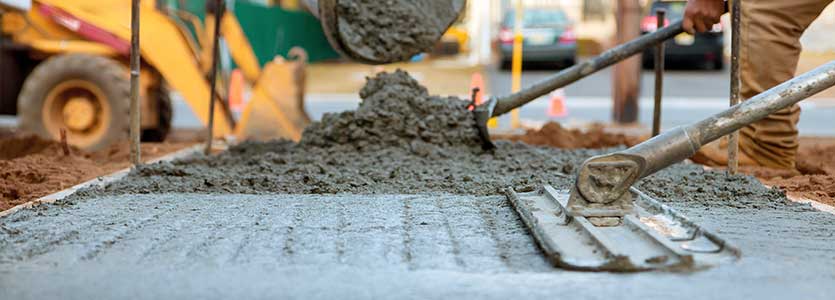
Concrete placement gets most of the attention because that’s when the project changes appearance quickly. The crew places, levels, finishes, and joints the concrete while the material is workable, so there’s a lot happening in a relatively short period.
Weather matters during this stage. Rain, high heat, and colder temperatures can affect scheduling and how the concrete behaves after placement. We would rather move a pour than force concrete work into conditions that create unnecessary problems.
Once the finishing is complete, the driveway may look ready almost immediately. It isn’t. The surface hardens well before the concrete has developed the strength it will continue gaining during curing.
Plan on Parking Somewhere Else for a While
Before demolition begins, move vehicles out of garages or parking areas that will become blocked by the project. Once the old driveway comes out, access usually remains limited until the replacement has gained enough strength for vehicle traffic.
For most new driveways, the first five to seven days are especially important. We keep vehicles and heavy equipment off the concrete during that early period, and colder weather can extend the wait considerably.
When temperatures are around 40 degrees, we may recommend waiting roughly 14 to 20 days before driving on the slab. In colder conditions, full curing can stretch toward 40 days. We explain the recommendation for the actual project instead of giving every homeowner the same calendar date.
Our article How Long Before You Can Drive on a New Concrete Driveway? covers that topic in greater detail.
What Can Change After Demolition?
This is one of the most useful questions to ask before replacement begins. The most common changes involve conditions underneath the driveway that couldn’t be fully evaluated while the old slab was still in place.
If we uncover a weak section, erosion, unexpected base conditions, or another issue that affects the replacement, we explain what we found and why it changes the work. That conversation should happen before the problem disappears under new concrete.
Homeowners should never feel as though an unexpected condition automatically becomes an unexplained charge. A contractor should be able to show you what changed and why the original plan needs to be adjusted.
A New Driveway Should Fix the Old Driveway’s Problems
The replacement process gives us one chance to see the entire area without concrete covering it. We use that opportunity to correct the support where needed, improve drainage where the site allows it, and make reasonable layout changes before the new slab goes in.
Sometimes the old driveway simply reached the end of its useful life and the original layout still works well. In that case, there’s no reason to redesign it for the sake of redesigning it. Good replacement work comes from knowing what should change and what should be left alone.
TriStar Concrete Solutions provides driveway replacement throughout Chattanooga, Cleveland, and surrounding Southeast Tennessee communities. Contact TriStar for a concrete estimate if you’d like us to look at your driveway and discuss what replacement would involve.
RECENT POSTS
Discover more helpful articles about concrete driveways, patios, walkways, and other residential concrete projects.
NEED HELP?
Don’t hesitate to contact us for more information about concrete services.
Talk With Our Team